
Guangdong Lifan Lighting · Zhongshan, China
We make the poles, assemble the lamps and build the battery packs ourselves.
Outdoor lighting built in Zhongshan since 2018 — solar street lights, LED street lights, floodlights, garden lights, sports lighting, and the poles that carry them.
01 — Who we are
A street light factory in Zhongshan, not a trading office.
Guangdong Lifan Lighting is a street light factory in Zhongshan, in the Pearl River Delta — the part of Guangdong where a large share of China’s outdoor lighting is made. We run two workshops: a 15,000 m² pole plant and a 2,000 m² lamp assembly plant, 17,000 m² in total.
We build outdoor lighting for roads, industrial parks, campuses, ports and public spaces: solar street lights, mains-powered LED street lights, floodlights, garden lights, sports lighting, high mast and stadium pole systems, and the poles that carry all of them.
Our founding team has been working in outdoor street lighting since 2015; the company was established in 2018. We employ 72 people — 60 in production, 8 in sales and 4 in quality control — and ship to more than 80 countries, mainly in Africa, Southeast Asia, South America and the Middle East.
Most of our orders are project orders rather than catalogue picks. That shapes how we work: we quote against a drawing or a specification, we send a technical sheet before production, and a batch does not start until that sheet is confirmed.
02 — What we make
Eight of the twelve steps in a street light happen here.
A finished street light passes through twelve main steps. Eight of them run in our own workshops; the remaining four are done by partner factories, and we name them rather than leave them out.
Pole plant
- 01Plate cuttingSteel plate cut to width before forming
- 02Pole rollingPlate rolled into a tapered shaft
- 03WeldingLongitudinal seam, base flange and door frame
- 04GrindingWeld seams ground back on visible faces
- 05Powder coatingCoated and oven cured to the colour spec
Five steps in one building — a shaft does not travel between suppliers from cutting to coating.
Assembly plant
- 06Lamp assemblyHousing, LED board, driver and optics
- 07AgeingEvery finished fixture, powered and run
- 08Battery pack assemblyCells matched, spot-welded and built into packs
Assembly, ageing and battery packs share one floor, so a solar light is finished in one place.
Done by partner factories
03 — Milestones
From a team to a 17,000 m² factory.
Founding team begins designing and selling outdoor street lighting.
Established in Zhongshan with a 5,000 m² pole workshop.
Takes on municipal and roadway projects; adds heavier production equipment.
Moves to a 15,000 m² pole plant and a 2,000 m² assembly plant. Sets up a product laboratory.
72 people, 80+ export markets, 7 design patents.
04 — Workshop one
The pole plant.
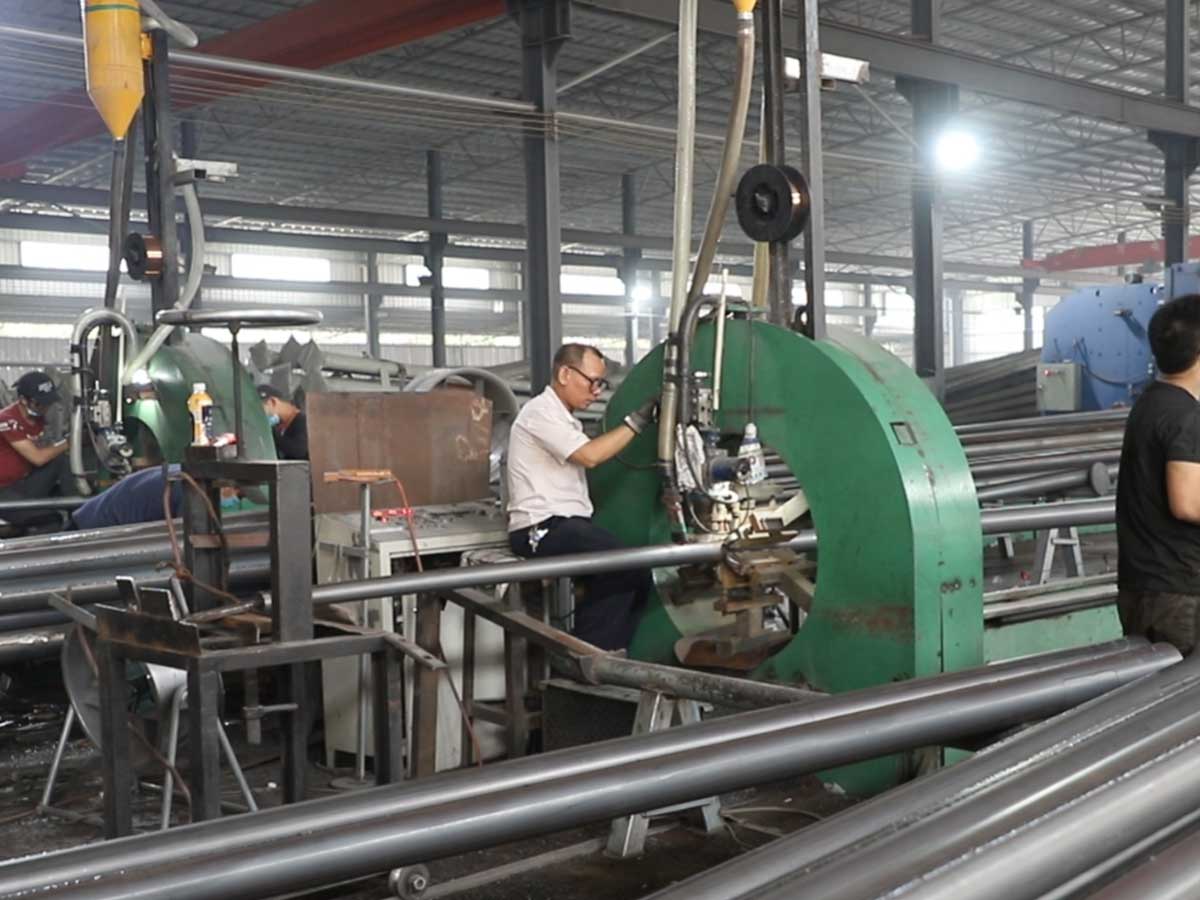
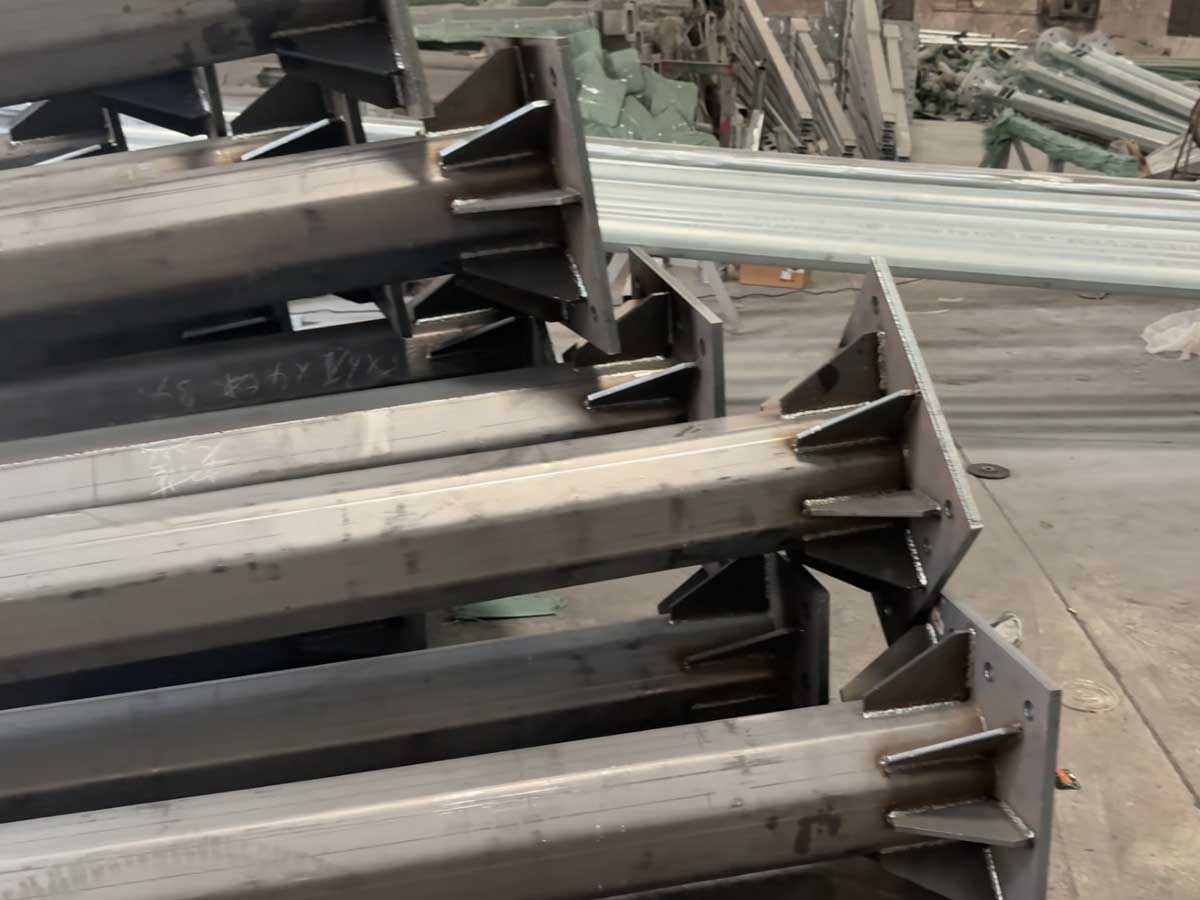
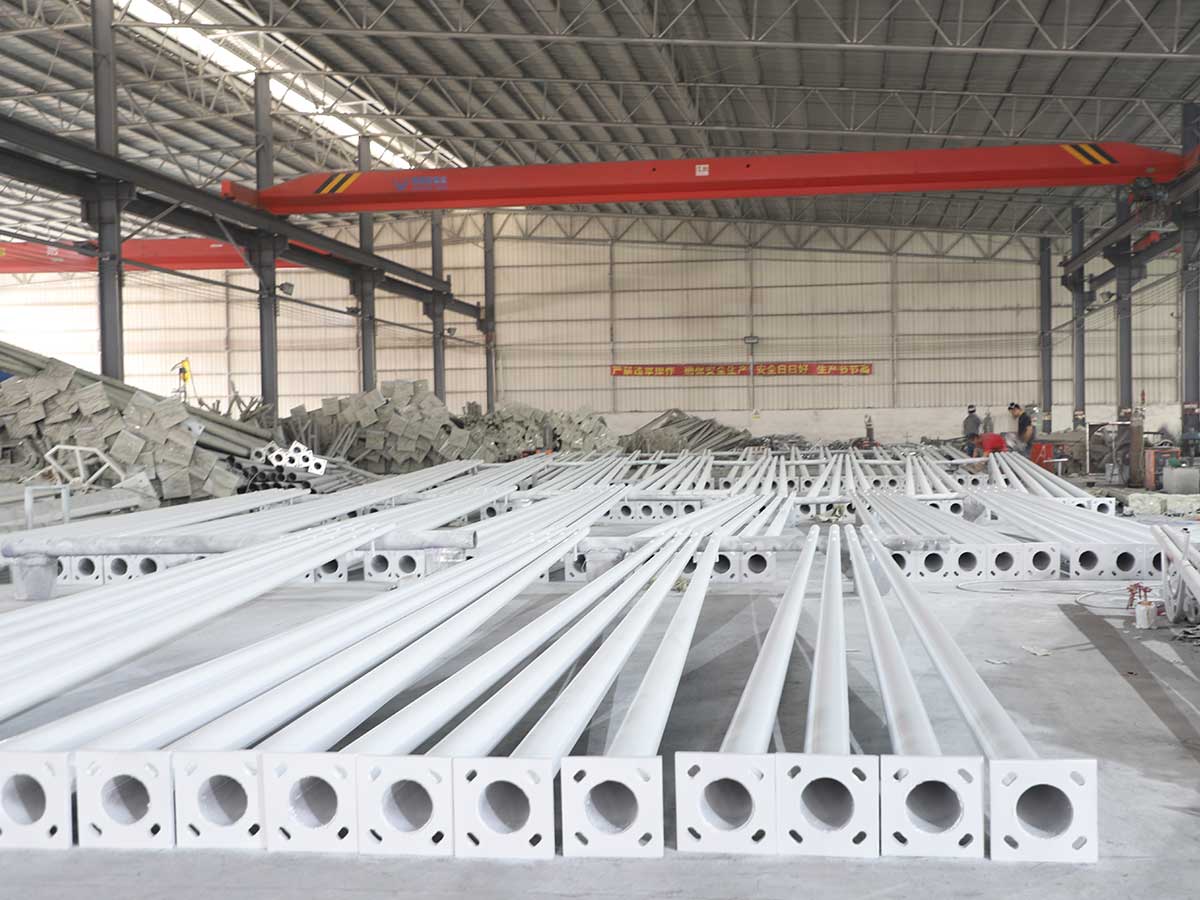
Poles begin as steel plate. The plate is cut to width, rolled into a tapered shaft, seam-welded, ground back at the visible welds, then powder coated. All five steps happen in the same building, which is why a shaft does not sit in a queue between suppliers waiting for the next operation.
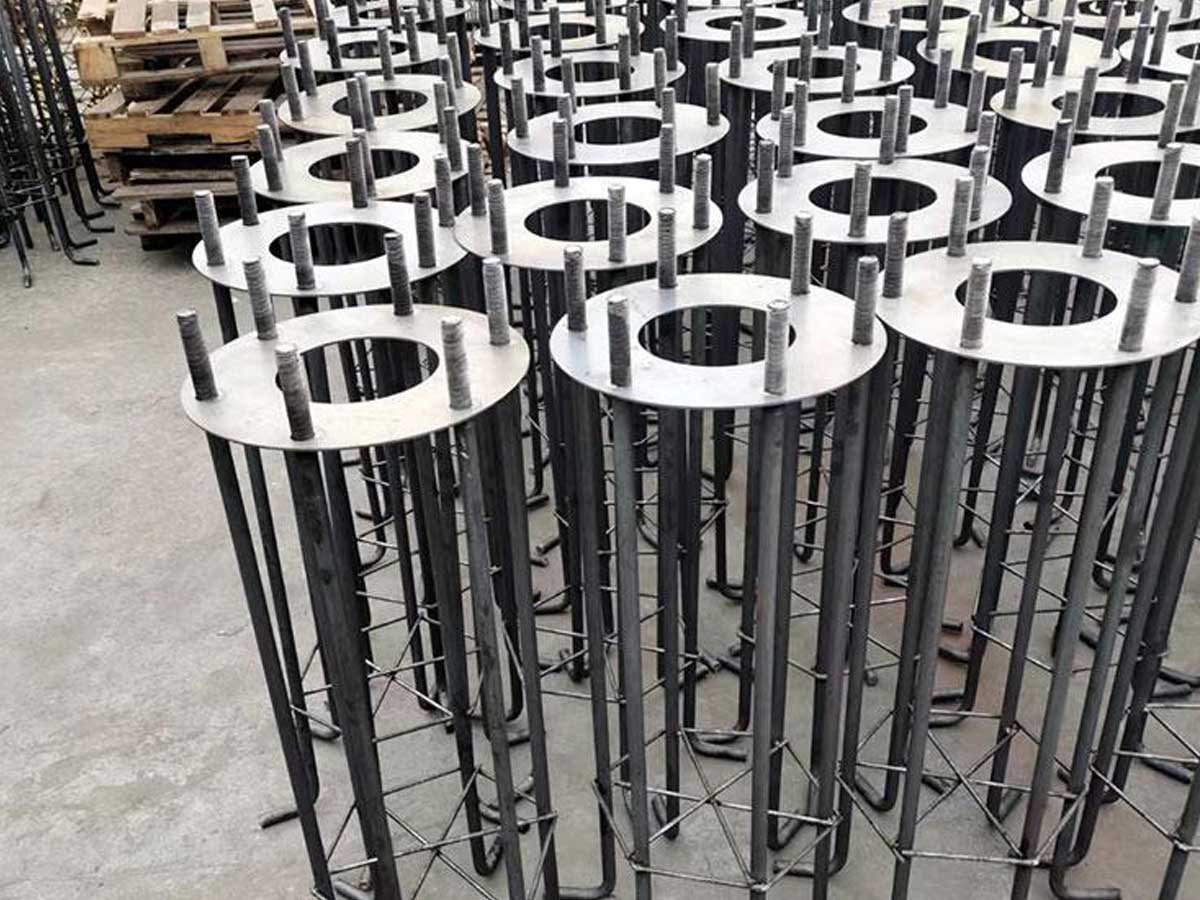
Most pole orders are made to a project drawing rather than picked from a catalogue — height, taper, wall thickness, door position, base flange and anchor bolt centres are set per order. Once coated, the poles leave the plant for hot-dip galvanizing, the one pole step we do not run ourselves.
The plant is 15,000 m² and sits in Zhongshan.


05 — Workshop two
The assembly workshop.
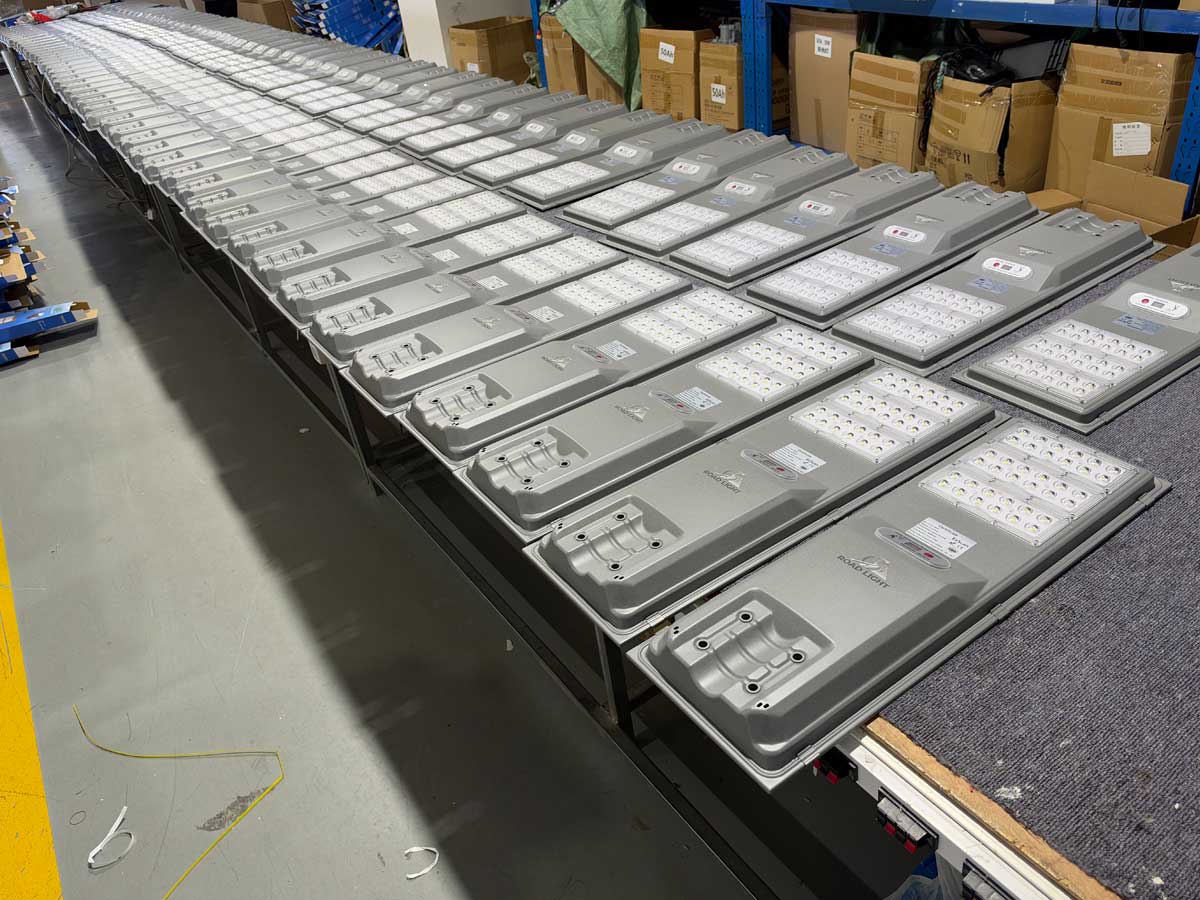
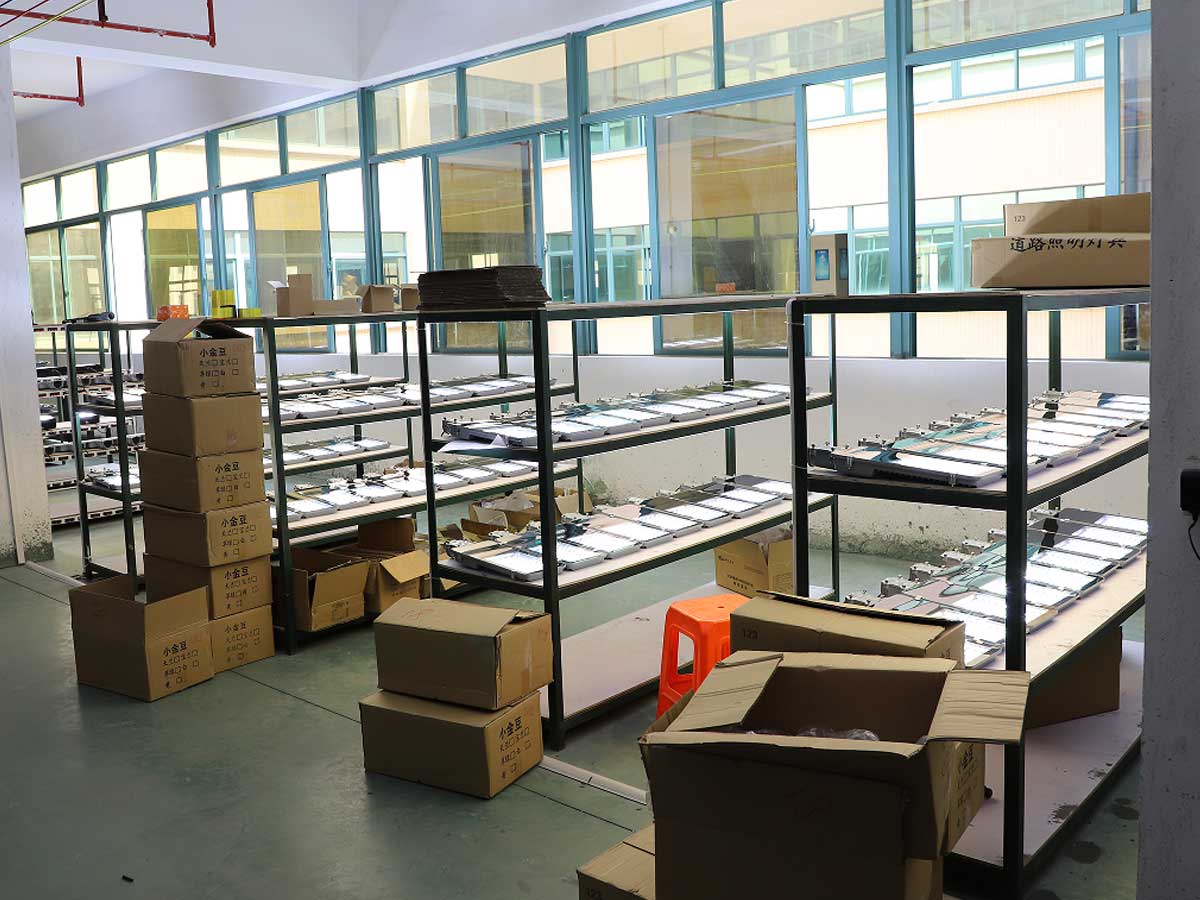
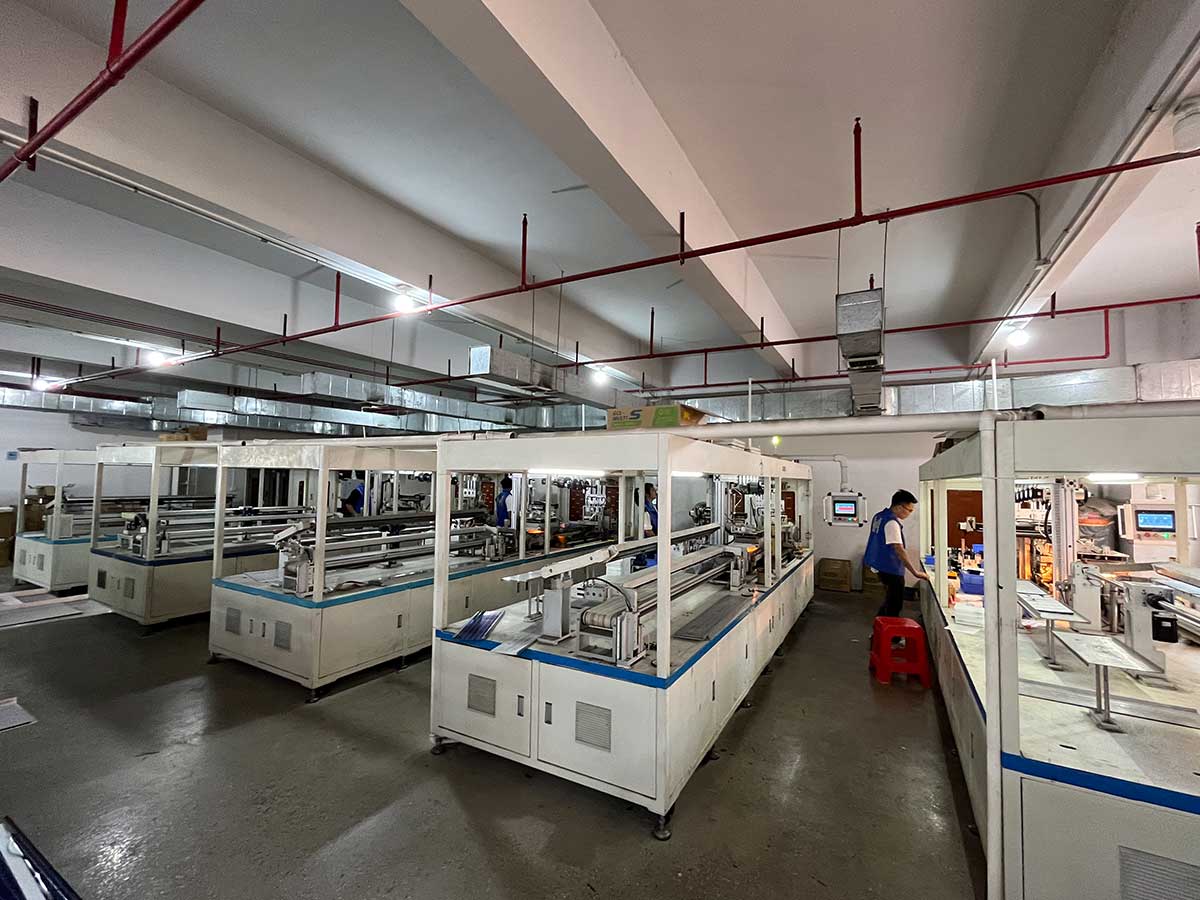
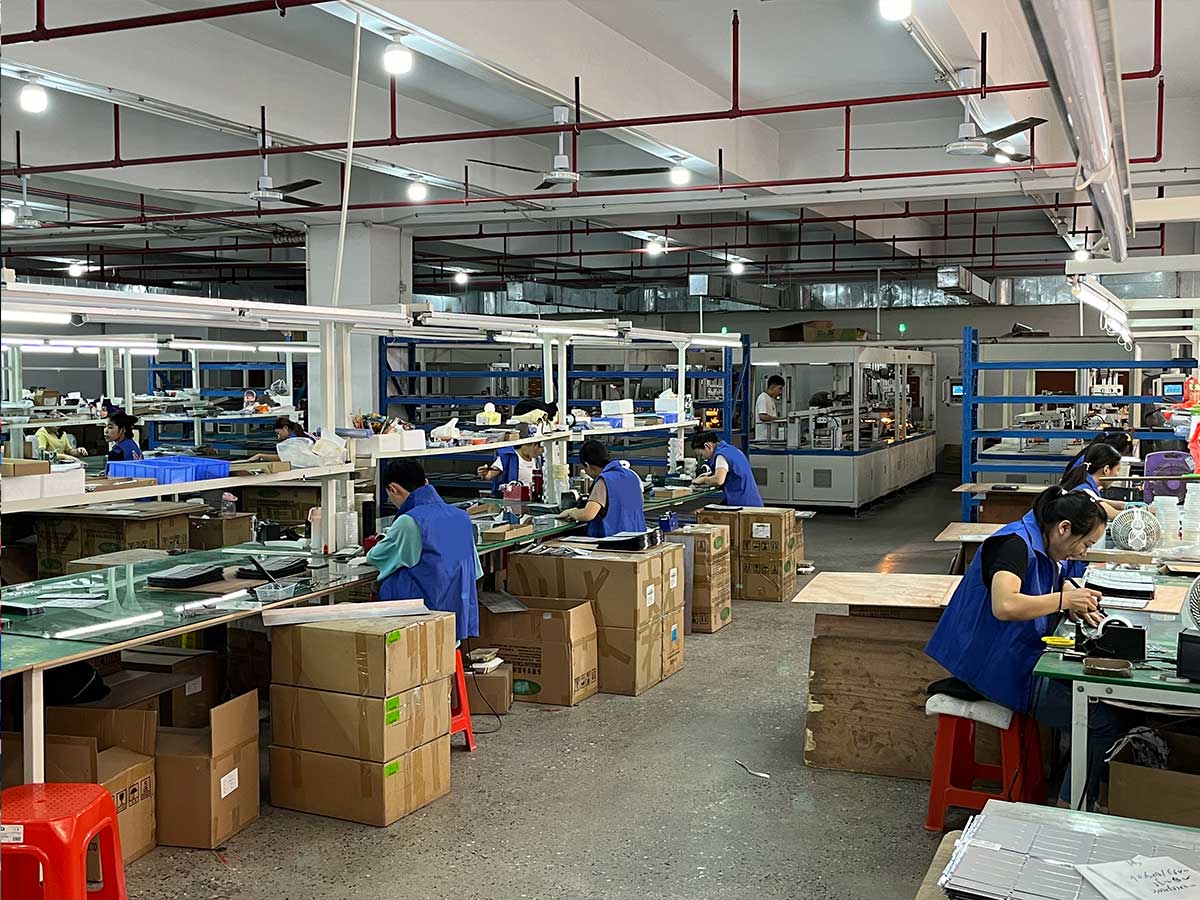
The 2,000 m² assembly plant is where a lamp becomes a lamp: housing, LED board, driver and optics go together, the fixture is sealed, then it is switched on and left running on the ageing line.
Sixty of our seventy-two people work in production, and most of them are here. Every finished fixture runs on the ageing line before it is packed — that is a full-unit check, not a sample, and it is the step that catches a bad driver before it reaches a container.
The same floor handles the battery packs for the solar range, so a solar light is finished, aged and packed without leaving the building.


06 — Battery packs
The battery pack line.
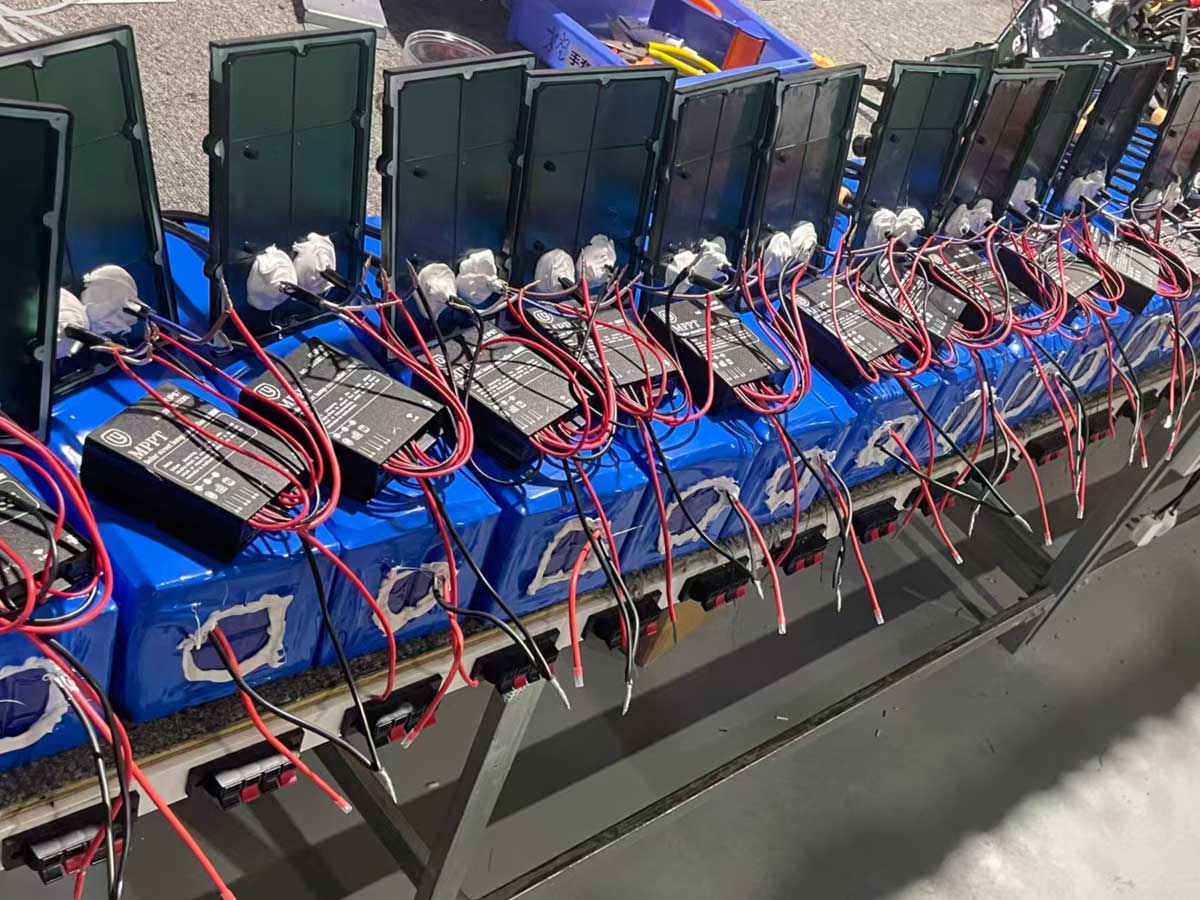
A solar street light lives or dies on its battery pack. Heat, deep cycling and a long sea freight are what actually break a pack, so we build them ourselves rather than buy them sealed and drop them into a housing.
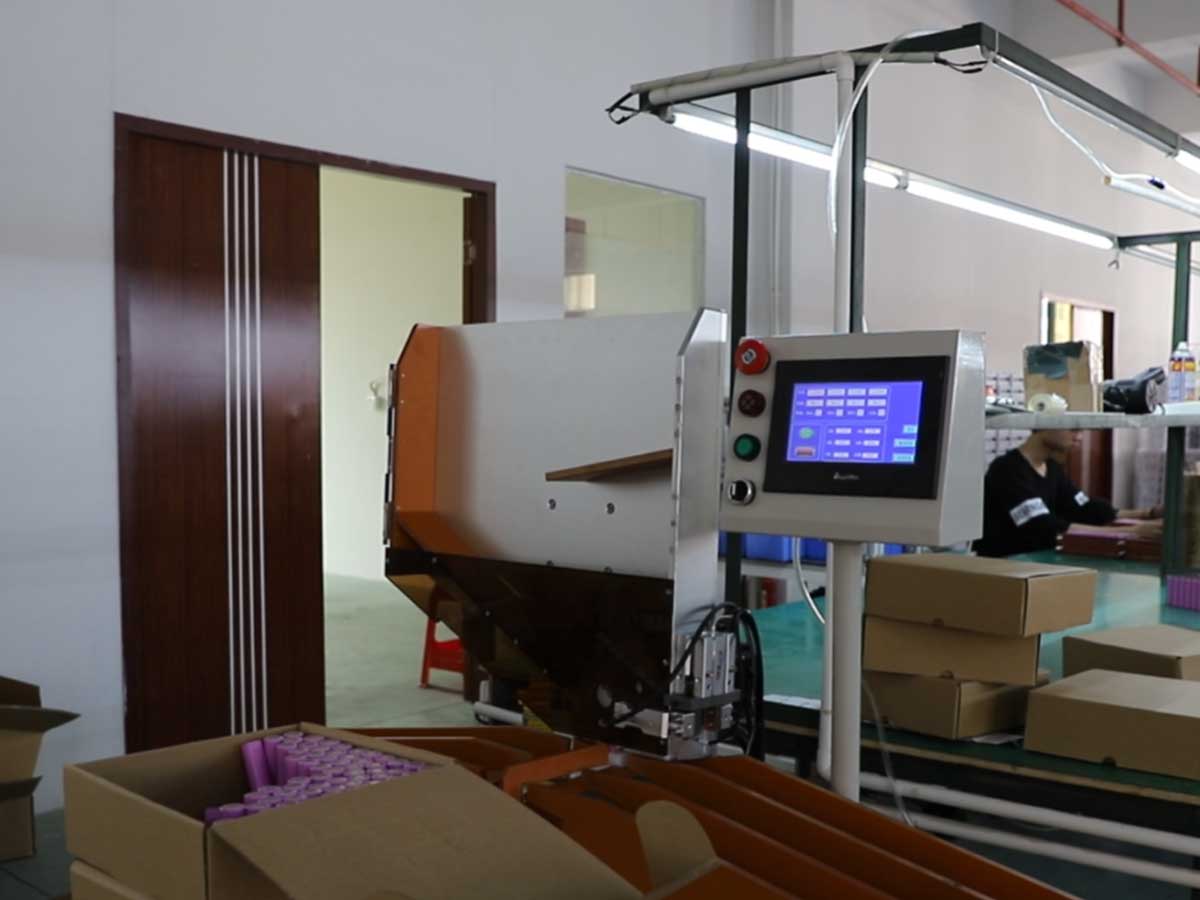
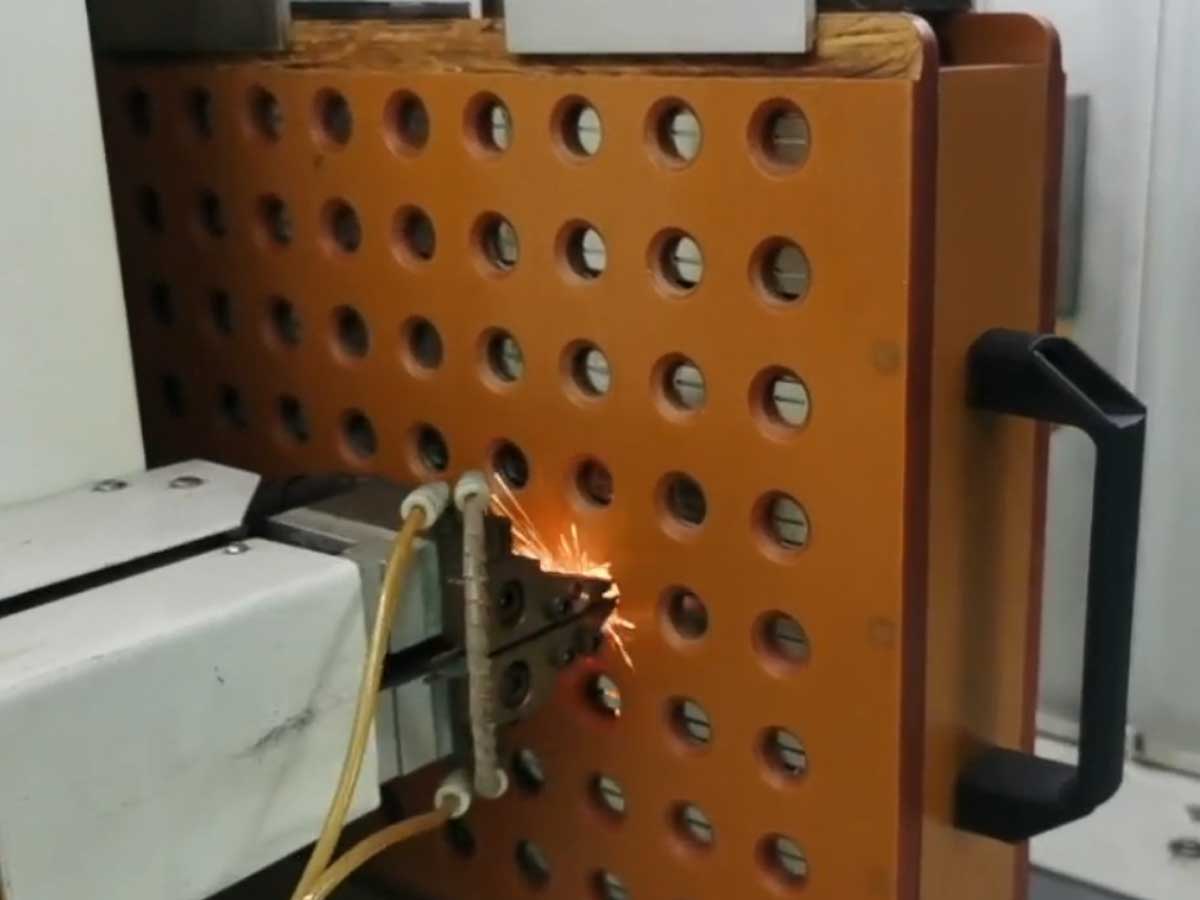
Cells are sorted and matched before assembly, then spot-welded into the pack on our own line. The finished pack goes through the same ageing discipline as the luminaires. Because the pack is built in our building, a replacement pack can be matched to an old order years later — something a sealed third-party pack cannot promise.
This is also where the honest limit sits: the cells themselves are not ours. We specify the cell, match them, build the pack and test it. The cell maker’s own test reports travel with the documents.

07 — Partner workshop
Where the PV panels come from.
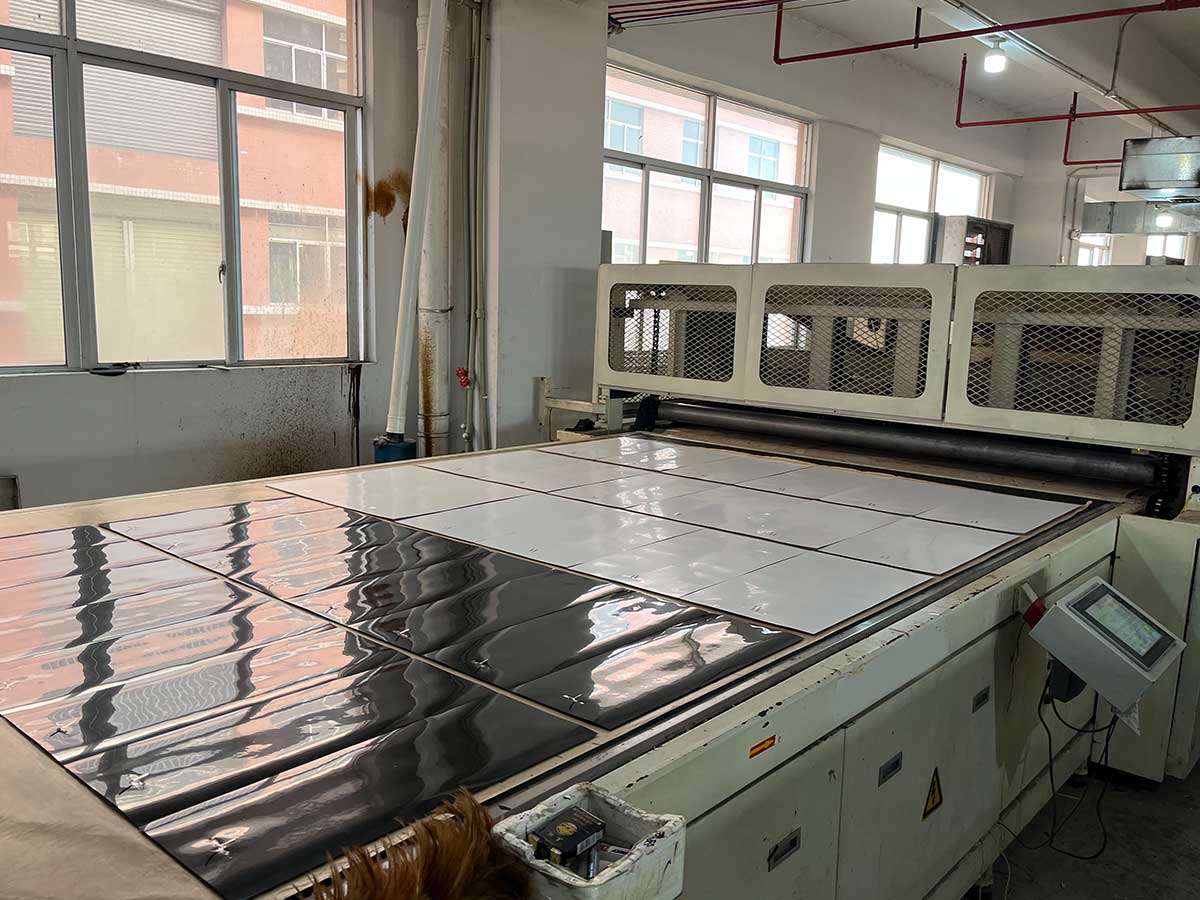
We do not make solar panels. They come from a partner workshop of 8,000 m² that strings the cells, laminates the panel and assembles the framed module used in our solar range.
We show it on this page because the panel is part of what you buy, and a buyer should know where each part of the product is made. It is also why the figure is stated separately: the 8,000 m² belongs to the partner, not to us. Our own two workshops total 17,000 m², and we do not add the two together.
Panels are ordered to our specification — cell type, wattage and dimensions per model — and inspected on arrival before they enter the solar line.

08 — Quality control
How we check every batch.
Four checks stand between a finished fixture and a carton. One of them covers every single unit; the other three run on every batch.
Ageing
Every finished fixture runs on our ageing line before it is packed. No sampling on this step. A driver that is going to fail in the first month usually fails here, in our building, rather than in a container or on site.
High temperature
Batch samples run at elevated temperature before a batch is released. This is where a marginal thermal design or a weak seal shows up early, while the batch can still be corrected.
Water ingress
Sample units from each batch are sprayed to IP65; IP66 for FGD01 and FGD04. The check covers the gasket line and the cable entry, which is where water actually gets in.
Photometry
Every new model is measured in an integrating sphere before release. Measured efficacy, wattage, beam angle and upward light ratio are published on the product page, and the full report goes with the quotation — the figures are measured on the finished fixture, not taken from a chip datasheet.
09 — Certification
Certification and compliance.
Documents travel with the goods. Tell us the model and the destination market, and we send the matching pack.
CEProduct compliance
All luminaires carry the CE mark. A declaration of conformity is issued for each model and supplied with the order documents.
RoHSSubstance compliance
All luminaires are RoHS compliant. Test reports for materials and components are available on request.
ISO 9001Quality management
Our quality management system is certified to ISO 9001. Certificate details are provided with quotations and on request.
10 — How we work
How an order runs.
Six steps, from your drawing to a loaded container. Nothing is produced against an unconfirmed specification.
Enquiry
Send a drawing, a specification or a project list. Tell us the destination market and the quantity — both change what we quote.
Quotation
You get price, lead time and a technical sheet. The sheet is the version that gets built, so it is worth reading twice.
Sample
A sample can be built before the bulk order, so the specification is settled on a real unit instead of a document.
Production
Pole work and lamp assembly are scheduled against the same delivery date, so a project does not arrive half-shipped.
Inspection
Every fixture is aged; batch samples go through temperature and water testing; the document pack is prepared.
Loading
Cartons are marked per order and the container is loaded at the workshop, with loading photographs sent before departure.
11 — Who we serve
Three kinds of buyer, three different needs.
The product is the same. What changes is the quantity, the documentation and who carries the risk if something arrives wrong.
Contractors and EPC firms
Project quantities, staged delivery and the documents you need for handover: photometric reports, compliance declarations and packing lists by batch. Poles and luminaires scheduled to the same site date.
Project supply →Wholesalers and distributors
Stable specifications across repeat orders, carton-level packing that survives a distributor’s warehouse, and room in the price for your own margin.
Wholesale terms →Brands and OEM buyers
Your logo, your colour, your packaging. Custom chip, voltage and controller configuration. Sampling before the bulk order, because a brand carries the warranty, not us.
OEM and ODM →Send us your specification, drawing or project list.
We will come back with a price, a lead time and the documents you need for your market.
Request a quotationLast updated: 28 November 2026